The Best Trellis Options for Vertical Growing in a Kitchen Garden
Trellises are extremely practical, but they can also be one of the prettiest features in a kitchen garden.
They guide plants upward, leaving valuable room in the bed for more herbs, vegetables, and flowers. They also bring height and structure to the garden, even when nothing is growing on them.
Vining plants such as cucumbers, peas, pole beans, and indeterminate tomatoes all benefit from support. You can even grow squash and smaller watermelons vertically, as long as you choose a strong trellis and support heavier fruit with slings as it develops.
And, of course, trellises are especially fun to wrap in lights for a little extra whimsy.
Arch Trellises
An arch trellis can connect two raised beds, creating a beautiful walkway with plants growing up and over it. We use one between our beds for cherry tomatoes and have lovingly dubbed it the “tomato tunnel.” It’s my favorite part of the kitchen garden.
Arches also work well at a garden entrance. If you don’t have beds on either side, place a large container at each end and let the plants climb from there.
Arch trellises provide plenty of growing room for vigorous plants such as cucumbers, pole beans, indeterminate tomatoes, and smaller vining squash. Just make sure the arch is tall enough to comfortably walk beneath and sturdy enough for the plants you have in mind.
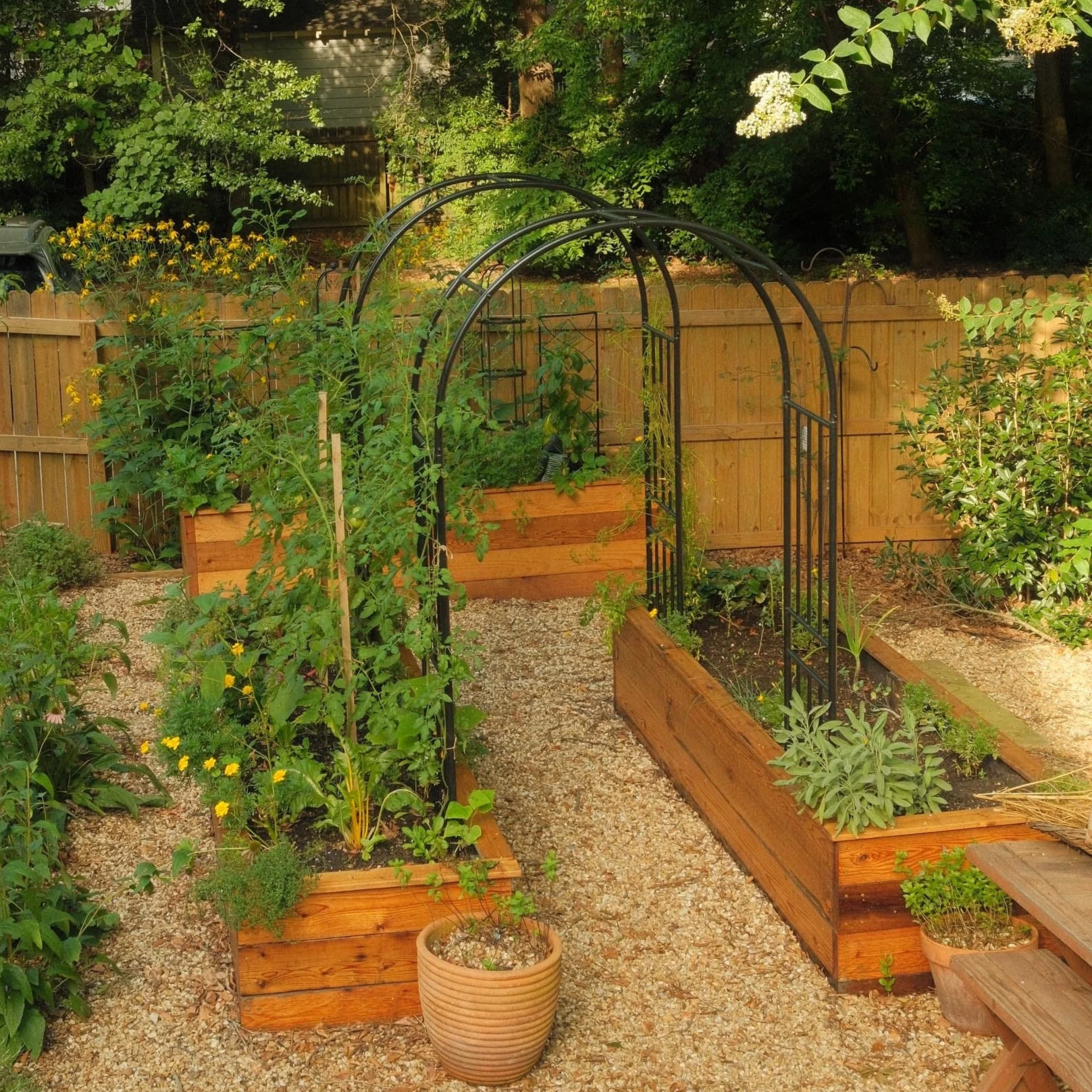
This kitchen garden features two raised beds connected by a pair of arched trellises. The design provides plenty of room for vertical growing while creating a beautiful walkway beneath the plants growing overhead.
Panel Trellises
Panel trellises have a flat growing surface and work especially well along the back of a border garden or one side of a raised bed. They give climbing plants plenty of room while creating a defined backdrop for shorter plants growing in front.
You can purchase a finished metal or wood panel or make your own using materials such as cattle panels. Whatever you choose, install it securely before your plants become large and heavy.
Obelisk Trellises
Obelisks are tall, tower-shaped trellises that fit neatly inside a raised bed, border garden, or large container. A row of matching obelisks down the middle of a larger raised bed can be especially pretty.
I leverage obelisks for smaller climbing plants such as peas, pole beans, and cucumbers. You can plant several vines around the outside and guide them upward as they grow.
Obelisks can support tomatoes too, but choose carefully. My indeterminate tomatoes typically grow well beyond the top of them, so a taller panel or arch is often a better fit.
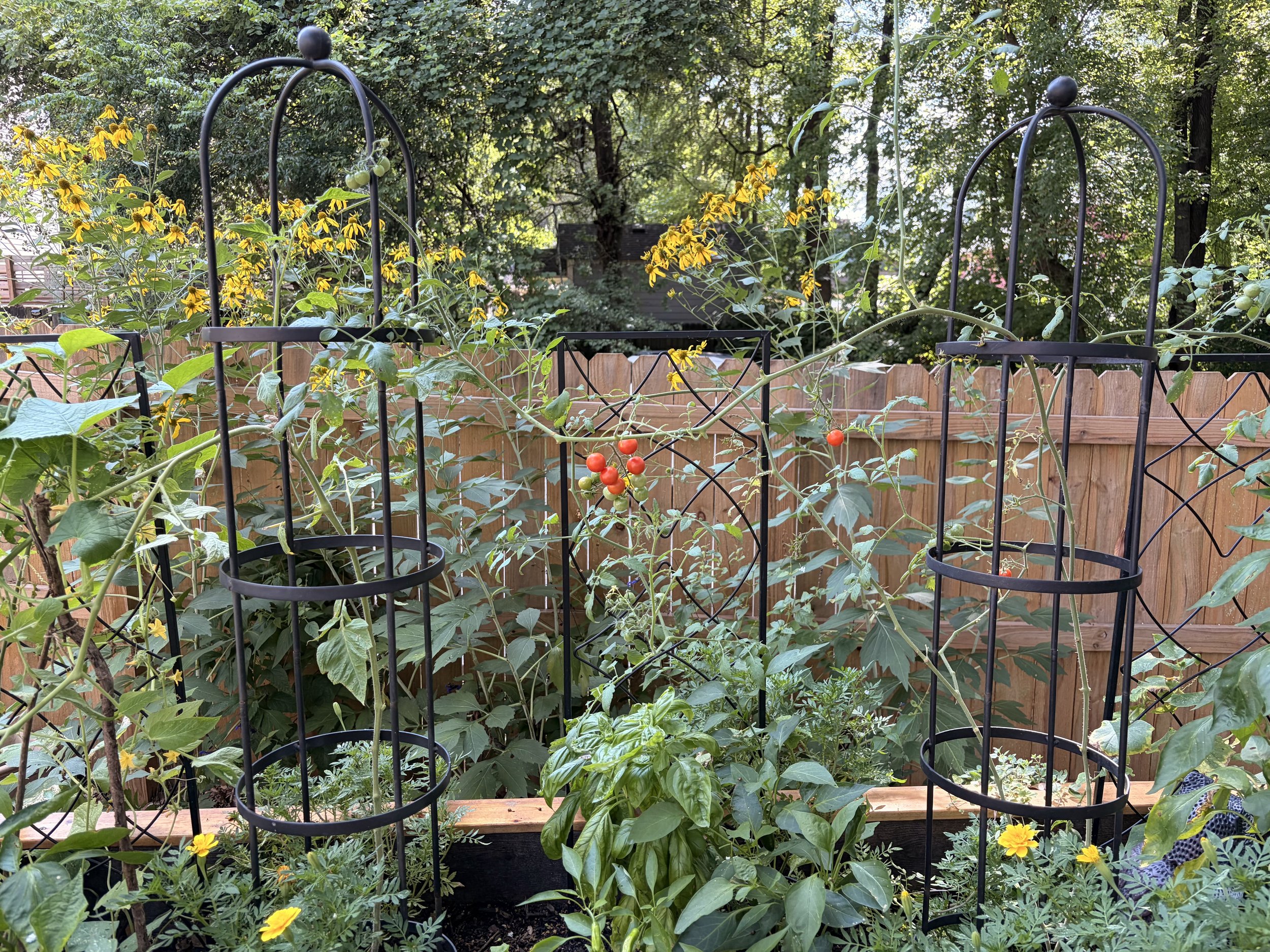
Two obelisk trellises bring height and symmetry to this raised bed, while smaller panel trellises along the back provide extra support for plants growing between them.
Mixing trellis styles makes good use of the available vertical space and adds another layer of interest to the garden.
Tomato Cages
The familiar tomato cages found at hardware stores can absolutely have a place in the kitchen garden. The key is choosing one that matches the plant's eventual size rather than its size when you bring it home.
Smaller cages may work for compact or determinate tomatoes, peppers, and eggplants. Most indeterminate tomatoes continue growing until frost and can quickly overwhelm a standard cage. For those, look for a taller, sturdier cage or use a panel, arch, or another substantial support.
Branches, Sticks, and Other Creative Supports
A trellis doesn’t have to come from a garden store. Reusing and upcycling materials you already have can be a more sustainable, natural approach. I’ve been known to grab sticks from the yard to stake smaller plants, and I love the cottage-garden feel they add.
You can tie branches together to create simple teepees, ladders, or small panels for peas and beans. It’s an inexpensive way to give garden materials a second life while adding plenty of character. This branch trellis tutorial from Finch + Folly is a nice example if you want to make one.
Choosing the Right Trellis
Before choosing a trellis, think about what you want to grow, how large and heavy it will become, and where the support will fit best. A delicate obelisk may be perfect for peas but not sturdy enough for a sprawling watermelon vine. A cattle-panel arch can support much more weight but needs enough room and secure installation.
Trellises come in nearly every garden style, whether yours leans traditional, modern, or charmingly cottage-like. The right one should support what you want to grow while adding height and beauty to the garden. If you’d like help choosing one and incorporating it into your kitchen garden, learn more about Marigold’s design services.
