Lettuce is a great place to start if you’re new to kitchen gardening.
It’s quick to harvest, happy in a container, and so much better than the greens that have been sitting in a plastic box at the grocery store. With a sunny spot and a packet of seeds, you can have fresh leaves ready to pick just outside your door.
Step 1: Choose Your Container
Lettuce has shallow roots, so your container only needs to be about six inches deep. A window box, wide planter, or galvanized tub can all work well.
The most important thing is good drainage. Make sure your container has holes in the bottom so excess water can escape.
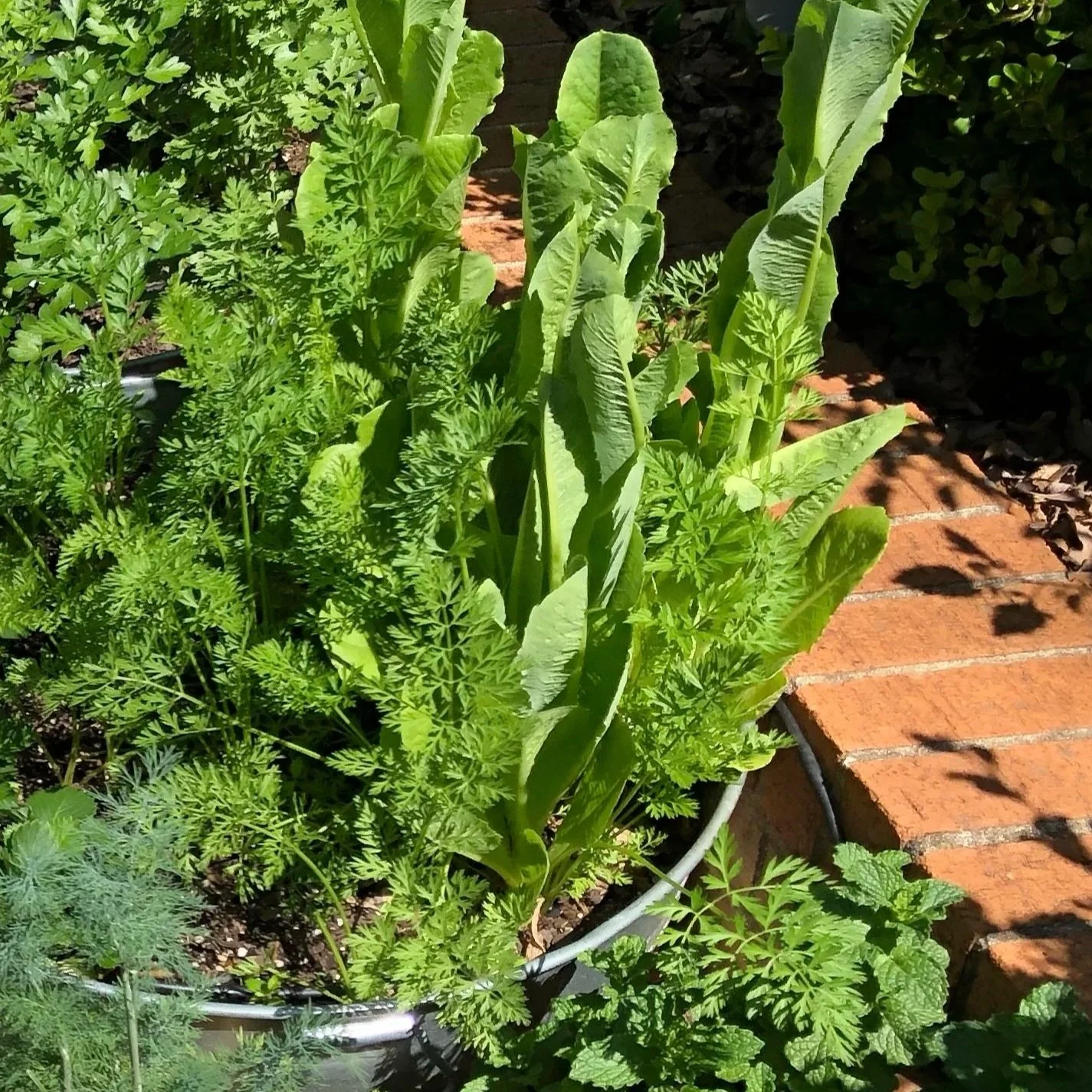
Galvanized tubs make great lettuce containers, and this was one of the first ways I started gardening, sowing lettuce seeds right alongside my herbs.
Step 2: Find the Right Spot
Choose a spot that receives at least four hours of sunlight each day. Six hours is even better during cooler weather.
As temperatures rise, a little afternoon shade can help protect your greens from the heat and keep them growing longer.
Step 3: Fill It with Good Soil
Fill your container with a quality potting mix rather than soil dug from the garden. Potting mix is lighter and drains more easily, which is especially important when growing in containers.
Mixing in a little compost will add nutrients and help your lettuce get off to a good start.
Step 4: Sow Your Seeds
Scatter the seeds across the surface of the soil, following the spacing and planting-depth directions on the packet. Lettuce seeds are tiny and generally only need a light covering of soil.
Water gently after planting so you don’t wash the seeds away. Ensure the soil remains consistently moist while you wait for them to germinate.
Once the seedlings begin to fill in, thin any crowded areas to give the remaining plants room to grow. The tiny greens you remove are edible, so add them straight to a salad rather than tossing them.
Looking for more information about seed starting? Here’s a helpful guide.
Step 5: Keep Them Growing
Container-grown lettuce needs consistent moisture. Check the soil regularly and water when the surface begins to feel dry. The goal is moist soil, not soggy soil.
For a steadier supply, sow another small batch of seeds every couple of weeks (succession planting) to keep fresh leaves coming instead of giving you one large lettuce harvest all at once.
Step 6: Harvest and Enjoy
Many leafy greens are ready to begin harvesting in about 30 to 40 days, depending on the variety.
For a cut-and-come-again harvest, pick the larger outer leaves and let the center of the plant keep growing. Harvest in the morning when the leaves are crisp, then rinse and enjoy.
What to Grow When in Georgia
Most lettuce prefers cooler temperatures, making fall through spring the best growing window around Decatur and Atlanta.
Lettuce: Grow during the cooler months of fall and spring.
Spinach: Handles cold weather especially well.
Arugula: Can be grown through much of the year. I grow arugula in my raised beds in spring, summer, and fall here in Decatur, GA.
Mizuna: Another good choice when you want a leafy green that tolerates warmer conditions.
With a little succession planting and the right varieties for the season, you can keep a container of fresh greens growing just outside your door for much of the year. Have questions or want support choosing the best lettuce varieties for your growing conditions? I’m here to help.
